
Wet or awkward ground
Investigate applications where ground machinery cannot enter without bogging, rutting or crop damage. A drone still needs suitable flying weather, safe access for its support crew and an appropriate application method.
Chinchilla & the surrounding Western Downs
Crop monitoring, drone spraying and spreading through the Aspex pilot network. For higher-value crops, awkward treatment areas and jobs where timing or access makes a difference.
Start with the problem
A small patch can matter: a weak section of melon crop, weeds spreading through useful pasture, or an area needing treatment when the ground is too wet for machinery. The useful question is what needs doing, how soon, and what is at risk if it is left.
Our network includes a pilot based in Chinchilla with multispectral and agricultural application equipment. We can discuss monitoring, spraying and spreading around the region, then confirm equipment, operator availability and the scope before quoting.
Choose the method that fits the job, whether that is a drone, a ground rig or a conventional aircraft.
Where a drone may add value
We assess each enquiry with the grower and adviser. These are situations worth discussing, rather than a promise that every application will suit a drone.
Investigate applications where ground machinery cannot enter without bogging, rutting or crop damage. A drone still needs suitable flying weather, safe access for its support crew and an appropriate application method.
Discuss isolated patches, corners and separated treatment areas where organising a large aircraft or moving a ground rig may be disproportionate to the job.
Ask about a verified untreated patch or an area needing further attention after the main application. Your agronomist determines the need, crop stage and treatment; overlap and previous applications must be accounted for.
Locate and assess emerging infestations, protect useful grazing and plan follow-up checks. Some weeds and treatment methods are better handled on the ground.
Scope targeted work on confirmed patches in crops or fallow. Detection, crop selectivity and treatment options depend on the species, growth stage and product. We do not assume a map can identify every weed.
Discuss suitable seed or granular materials on awkward areas. Product compatibility, payload, application rate and the area determine practicality. Seed establishment also needs suitable moisture, preparation and seed-to-soil contact.
Spraying & spreading
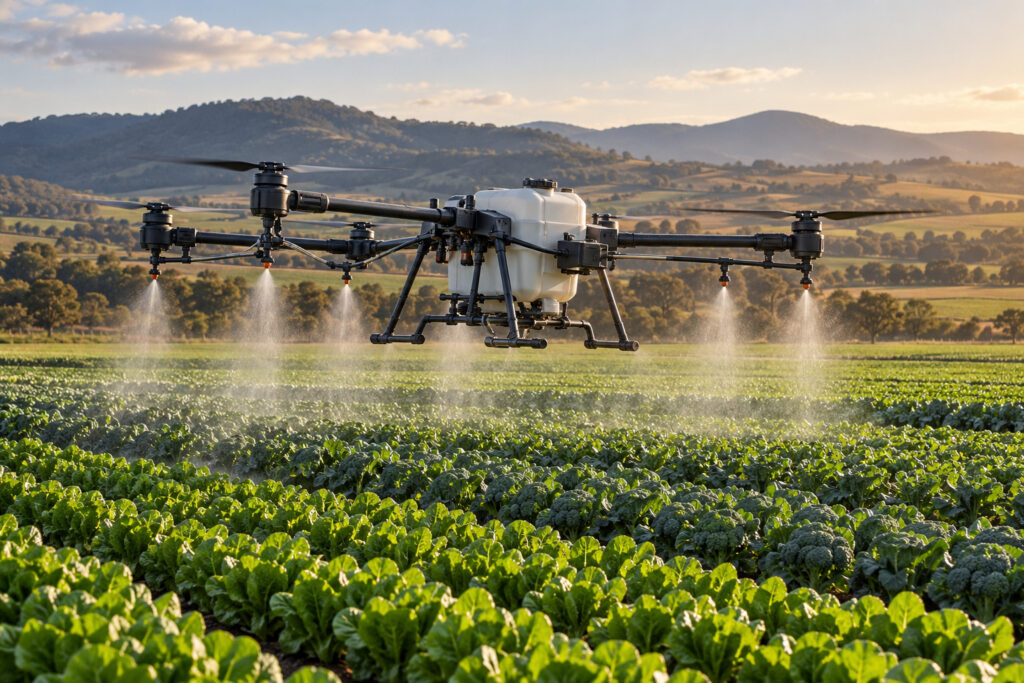
We can arrange spraying and spreading enquiries through independent network businesses, with the authorisations and insurance appropriate to the proposed work confirmed before an assignment is agreed.
For cotton, grains and other broadacre crops, our starting point is a particular access problem, isolated patch or time-sensitive application. A ground rig or conventional aircraft may remain the more economical choice for a large, straightforward area.
Difficult access does not remove application restrictions. Buffers, nearby sensitive crops, waterways, obstacles and people can still prevent a job going ahead. Flying near powerlines or other obstructions is not automatically suitable because the aircraft is smaller.
Tell us the location, crop or land use, target, area, proposed material and timing. We will assess the method, coverage requirements, site conditions and availability with you and your adviser.
Melons & other higher-value crops

RGB and multispectral imagery can show uneven establishment, differences in canopy response and patterns that warrant irrigation, soil or crop inspection. Capture must be timed and detailed enough to answer the agreed question.
The map does not establish the cause. Your agronomist’s field observations and measurements distinguish water, nutrition, pests, disease and other influences.
Satellite monitoring can provide a useful overview. We concentrate drone capture on the smaller zones, rows or trial areas where finer detail could change a decision.
Plan ahead with your adviser
These are indicative planning windows for Chinchilla and the surrounding region. Rainfall, growth stage and local conditions matter more than the month alone. A useful inspection window is not automatically a suitable drone-spraying window.
| Crop or target | When to inspect or enquire | Possible task | Where a drone fits |
|---|---|---|---|
| Feathertop Rhodes grass & summer grass weeds | Plan before spring rain; inspect after warm-season germinating rainfall. Check again after further rain. | Find emerging patches and plan control while plants are young, before seed production. Winter and spring management may also be important. | Mapping and selected patch applications where identification, crop safety and the permitted method are confirmed. Larger or stressed plants may need a different approach. |
| Fleabane | Winter–spring; pre-plant, during the winter-crop phase and immediately after harvest. | Find small plants and escapes before they become large, moisture-stressed summer weeds. | Locate patches for inspection and assess targeted treatment. Do not wait until summer simply because it is described as a summer weed. |
| Parthenium | After germinating rain, particularly in warmer conditions. Inspect promptly: plants can set seed quickly. | Address small infestations before seed set and monitor for further emergence. | Potential mapping and suitable application work. Confirm identification, biosecurity hygiene and follow-up; treatment options differ between crops and pasture. |
| Mother-of-millions | Flowering, generally May–October, makes infestations easier to see. Control can be considered at other times. | Locate pasture infestations, plan treatment and check for regrowth. The plant is toxic to livestock. | Useful for locating exposed patches. Drone treatment is conditional on coverage and an appropriate permitted application method; ground treatment may be preferable. |
| African boxthorn | Often February–May for foliar treatment when actively growing; avoid hot, dry or drought-stressed conditions. | Map infestations and select a suitable control method with an adviser. | Possibly not suitable for drone spraying; often better treated on the ground. Thorough foliar coverage or basal-bark/cut-stump methods may be needed. We assess suitability rather than promise an aerial treatment. |
| Lantana, where present | Assess during active growth; autumn can be a useful foliar-control window before nights become too cold. | Locate patches, assess access and plan integrated control and follow-up. | Mapping may help. Dense foliage and coverage requirements need assessment; ground or other control methods may be more appropriate. |
| Cotton | During the growing season and as harvest preparation approaches. Regional picking is generally March–June; crop maturity determines harvest-aid timing. | Assess verified untreated areas, weed escapes or patches needing separate agronomic attention. | Consider targeted follow-up where appropriate. Check prior applications, overlap, crop maturity, required coverage and label conditions before deciding. |
| Melons & horticultural crops | Establishment and agreed decision points through the crop cycle; investigate developing variability promptly. | Capture uneven establishment, canopy differences, irrigation patterns or trial response for ground checking. | Detailed RGB/multispectral monitoring. Any spraying is a separate assessment of crop, target, product and application suitability. |
| Pasture or cover-crop seed; suitable granular materials | Before the chosen establishment or input window, with suitable soil moisture and conditions forecast. | Assess spreading on selected awkward or inaccessible areas. | Check material compatibility and rates. A drone does not replace seedbed preparation or guarantee germination, and high-volume applications may be uneconomical. |
A planning guide, not a spray prescription. Species identification, crop stage, resistance history and the adviser’s recommendation come first. Any chemical application must meet the applicable label or permit, including aerial-use conditions, coverage, water volume, buffers and withholding requirements. The operator must confirm suitability for the particular job.
Prepared 1 November 2026 from regional council, Queensland Government, GRDC, WeedSmart, CottonInfo and APVMA guidance. Regional weed listings do not mean a species occurs on every property. The proposed service opportunities are subject to local assessment.
Use this table to start a conversation with your adviser, then check current guidance and the proposed product’s conditions before treatment.
Growers, agronomists & project groups
Nearby growers can coordinate monitoring rounds to share mobilisation and planning where practical. Agree the question, crop stage, ground checks and required outputs first; test the value of an initial round before committing to repeat visits.
For on-farm trials, rehabilitation or grower projects supported by natural resource management programs, give us the funder’s measurement and reporting requirements before capture is planned. We can scope suitable aerial records; a map alone does not prove a project outcome or guarantee funding.
Useful outputs may include orthomosaics, multispectral layers, marked inspection areas and repeat imagery. We agree positioning, resolution, formats, delivery and any information-sharing arrangements in advance.
Chinchilla & surrounding properties
Send your location, crop or land use, approximate area, target and timing. For monitoring, tell us what decision the information should support. For spraying or spreading, include the proposed material and your adviser’s requirements.